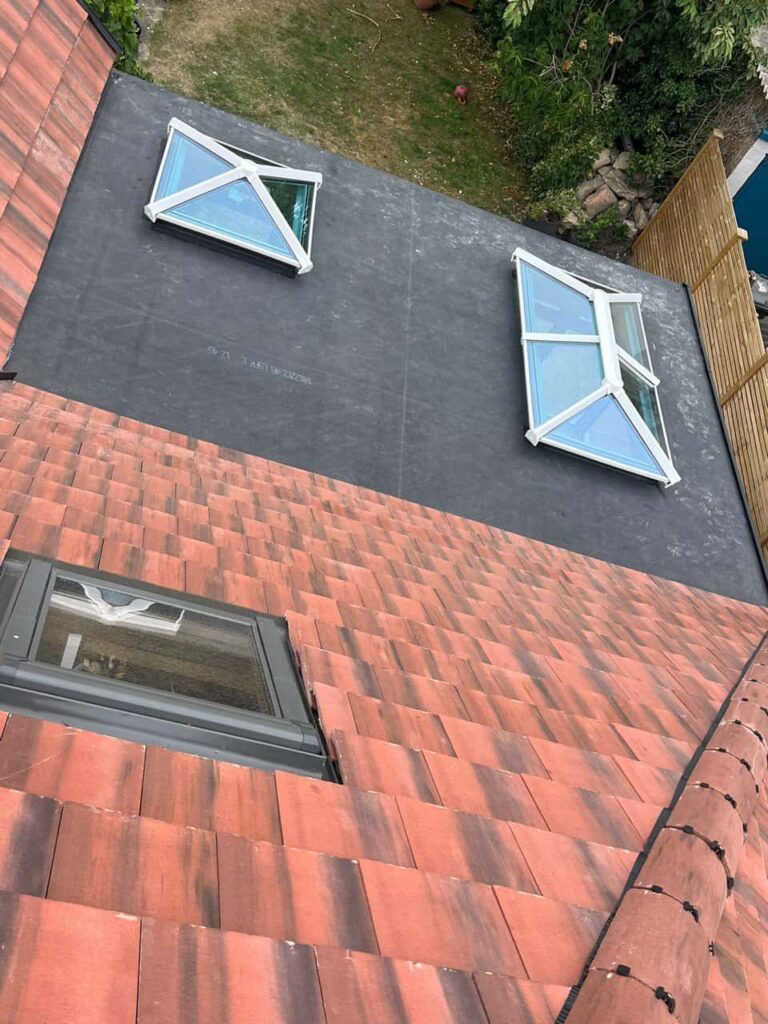
A roof can appear to be performing normally for months before suddenly developing a leak, slipped tile or other noticeable defect following a spell of bad weather. Although it may seem that the weather has caused an entirely new problem overnight, the reality is often more complicated. Wind and prolonged rainfall can expose weaknesses that were already developing but had not yet become obvious.
For homeowners in Westerham, Kent, understanding why roofing problems frequently become noticeable after difficult weather can help prevent relatively minor defects from developing further. Prompt professional inspection is particularly valuable when something about the roof has changed following heavy rain or strong winds.
Bad Weather Can Expose Existing Weaknesses
Roofing materials are designed to withstand outdoor conditions, but they do not remain unchanged throughout the life of a property.
Tiles, fixings, flashing, mortar and other components can gradually deteriorate. Under normal conditions, a small weakness may not immediately affect the roof’s ability to keep water out.
A sustained period of poor weather places greater demands on these vulnerable areas. What previously appeared to be a minor defect can then become much more noticeable.
This is why bad weather should not always be regarded as the sole cause of roofing damage. In many cases, it reveals deterioration that had already begun.
Strong Winds Can Disturb Roof Tiles
Tiles need to remain correctly positioned to form an effective weather-resistant covering.
Strong winds can place pressure on tiles, particularly where they are already loose, damaged or inadequately secured. Once a tile moves, the area beneath can become more exposed to rain.
After windy weather, homeowners may notice:
- Slipped tiles
- Missing tiles
- Broken tile fragments
- Changes in the appearance of the roof
- Debris around the property
- Newly developed water ingress
Even a relatively small change to the roof covering can justify closer inspection.
Prolonged Rain Tests the Roof Differently
A short shower and several hours or days of persistent rain do not place the same demands on a roof.
During prolonged wet conditions, rainwater continually travels across tiles, valleys, flashing and roof junctions. Any weakness within these areas has more opportunity to allow moisture through.
This can explain why a roof that seemed perfectly satisfactory during occasional light rainfall suddenly begins leaking during an extended period of wet weather.
The problem may have existed for some time but required sustained conditions before becoming apparent.
Wind-Driven Rain Can Find Vulnerable Areas
Rain does not always fall vertically onto a roof.
When strong winds accompany rainfall, water can be driven against roof coverings and junctions from different directions. This can expose weaknesses that may not cause problems during ordinary rainfall.
Areas around flashing, roof junctions, ridges and displaced tiles can become particularly important.
If water ingress only appears during certain weather conditions, identifying the precise entry point requires careful assessment rather than simply assuming the damp area directly beneath is responsible.
Small Cracks Can Become More Significant
A cracked roof tile may continue sitting in position and initially appear relatively harmless.
However, repeated exposure to rain and changing weather conditions can gradually worsen the defect. Moisture can penetrate damaged areas, while continued movement and weathering can cause the crack to develop further.
Eventually, part of the tile may break away or the damaged section may stop providing adequate protection.
Finding and replacing defective tiles before deterioration progresses can help preserve the surrounding roof covering.
Flashing Can Become a Weak Point
Flashing is used around vulnerable roof details and junctions to prevent water penetration.
Over time, flashing can deteriorate, become loose or develop defects. Difficult weather conditions may then expose these weaknesses.
Because flashing is commonly located around areas where different roof surfaces or structures meet, defects can allow water to enter in ways that are not immediately obvious from ground level.
Professional inspection can determine whether the flashing itself requires attention or whether another nearby roofing component is responsible.
Valleys Handle Significant Amounts of Rainwater
Roof valleys collect water from adjoining slopes and direct it towards the drainage system.
During prolonged or heavy rainfall, these areas may carry considerable amounts of water. Any damage, blockage or deterioration within a valley can therefore become particularly noticeable during poor weather.
A problem that remains hidden during lighter conditions may reveal itself when the volume of water increases.
Because valleys perform such an important drainage function, suspected defects should be professionally assessed rather than ignored.
Ridge and Verge Areas Can Be Exposed to Weather
The edges and highest points of a roof can experience considerable exposure.
Where ridge or verge components have deteriorated, strong winds and heavy rainfall may make existing weaknesses more apparent.
Loose materials, displaced components or visible deterioration following bad weather should be investigated.
These areas form part of the overall weatherproofing of the roof, so their condition should be considered alongside tiles and other roofing details.
Gutters Can Contribute to Problems During Heavy Rain
Not every problem noticed after bad weather originates from the main roof covering.
Gutters are responsible for carrying rainwater away from the roof. If they are blocked, damaged or unable to drain effectively, water can overflow and affect surrounding roofline areas.
Periods of heavy rainfall often make drainage problems much easier to identify because larger volumes of water are moving through the system.
Signs may include overflowing sections, water running down exterior surfaces or persistent dampness around particular roofline areas.
Why Can a Leak Appear Away From the Actual Defect?
One of the challenges with roof leaks is that the internal damp patch does not necessarily identify the external entry point.
Once water gets beneath the roof covering, it may travel along timbers, underlay or other surfaces before becoming visible.
This means a ceiling stain in one location could originate from a defect further up the roof.
Attempting to repair the area directly above an internal mark without investigating the wider roof can therefore miss the actual cause.
Professional roofers assess the likely route taken by the water as well as the visible symptoms.
Older Roofs May Show Problems More Quickly
Age alone does not mean that a roof is defective, but older roofing systems can contain components at different stages of deterioration.
A period of severe weather can expose these weaker areas.
Homeowners may find that one problem is followed by another elsewhere on the roof. When defects begin occurring repeatedly, it becomes important to assess the overall condition rather than continuing to treat every issue as completely separate.
A professional inspection can determine whether the roof remains generally serviceable or whether deterioration has become more widespread.
Previous Repairs Can Also Need Attention
A roof that has undergone repairs in the past should still be inspected when new symptoms develop.
Previous repairs may remain completely sound while a different nearby component has deteriorated. Alternatively, changes elsewhere on the roof can affect how water moves across the surface.
The objective should be to identify the current cause rather than automatically assuming that an older repair has failed.
What Should You Look for After Bad Weather?
You should never put yourself at risk by climbing onto a roof to inspect it. However, there are several warning signs that can often be noticed safely from ground level or inside the property.
Look out for:
- Missing or visibly displaced tiles
- Broken roofing material on the ground
- New damp patches on ceilings
- Water staining within the roof space
- Overflowing gutters
- Loose-looking ridge or verge materials
- Debris that appears to have come from the roof
- Changes to flashing or other visible roof details
- Recurring dampness following rainfall
Any noticeable change following difficult weather is worth investigating, particularly if the roof has previously experienced problems.
Why Prompt Roof Repairs Matter
A minor defect does not necessarily remain minor.
Once part of the roof’s protective covering has been compromised, continued exposure to rain can affect surrounding materials. A displaced tile, small flashing defect or localised weakness may become more troublesome if another spell of poor weather arrives before repairs are completed.
Early professional attention allows the problem to be identified while it may still be relatively localised.
This is one of the main reasons homeowners should avoid waiting for a small leak to become significantly worse before arranging an inspection.
Professional Assessment Identifies the Actual Cause
Roofing problems are not always straightforward from ground level.
A visible slipped tile might be the complete problem, or it might be one sign of broader deterioration. Similarly, water ingress could originate from tiles, flashing, valleys, junctions or another roofing detail.
Professional assessment provides the opportunity to examine the roof as a system rather than making assumptions based on the most obvious symptom.
Where damage is localised, an appropriate repair can restore the affected area. Where several defects are identified, the wider condition of the roof can be considered.
Professional Roof Repairs in Westerham
Westerham Roofing Repairs provides professional roofing services for homeowners in Westerham, Kent.
If you have noticed slipped tiles, water ingress or another roofing problem following a period of heavy rain or strong winds, having the roof assessed can help identify the underlying cause before further deterioration occurs.
Our focus is on determining what has actually gone wrong and carrying out the roofing work required to restore the affected area, rather than simply treating the most visible symptom.
Conclusion
Roof problems often appear after bad weather because strong winds and prolonged rainfall place additional demands on every part of the roofing system. In many cases, these conditions expose existing weaknesses such as loose tiles, deteriorated flashing, vulnerable junctions or drainage problems that were not previously obvious.
A problem becoming noticeable after a storm does not necessarily mean the entire roof has suddenly failed. However, it does provide a good reason to have any new defects investigated promptly.
For homeowners in Westerham, Kent, Westerham Roofing Repairs can professionally assess roofing problems following difficult weather and determine the appropriate repairs needed to keep the roof performing effectively.
Call us on: 01959 584 099
Click here to find out more about Westerham Roofing Repairs
Click here to complete our contact form and see how we can help with your roofing needs.