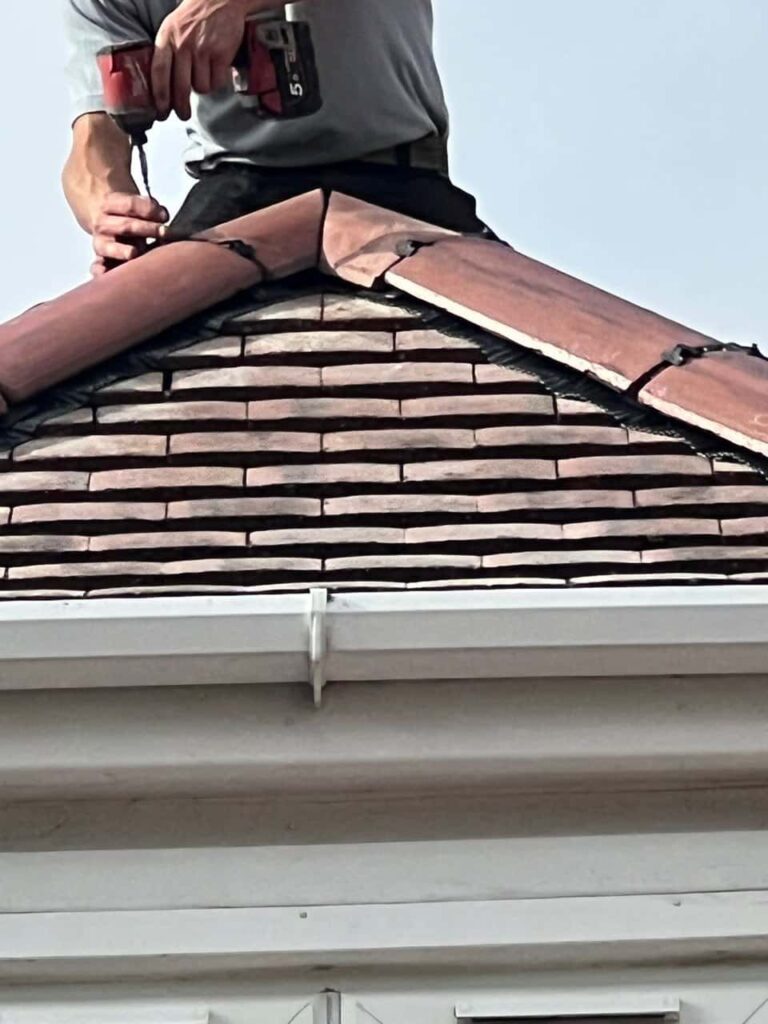
Roof tiles are designed to remain securely positioned and protect a property from rain, wind and changing weather conditions. However, tiles can sometimes move, slide or become partially detached from the roof structure. A slipped tile may appear to be a minor issue, but leaving it unaddressed can allow water to reach areas that should remain protected.
For homeowners in Westerham, Kent, understanding why roof tiles slip, what problems they can cause and when professional repairs are appropriate can help prevent a small roofing defect from developing into a more serious problem.
What Causes Roof Tiles to Slip?
Several factors can cause roof tiles to move from their intended position. Weather exposure is one of the most common, particularly where repeated wind and rain place stress on roofing materials and fixings.
Other possible causes include:
- Damaged, deteriorated or missing fixings
- Ageing roofing materials
- Incorrectly installed or poorly secured tiles
- Movement within the roof structure
- Damaged battens or supporting materials
- Impact from falling branches or other objects
- Previous repairs that have not provided adequate support
The underlying cause is important. Simply repositioning a slipped tile may not resolve the problem if the fixing or supporting structure has also deteriorated.
How Can You Tell If a Roof Tile Has Slipped?
Some slipped tiles are easy to spot from ground level, particularly when a tile is noticeably lower than the surrounding rows or appears uneven.
Other signs may be less obvious. You might notice a gap in the roof covering, a tile sitting at an unusual angle or pieces of broken tile around the property.
Inside the property, signs such as damp patches, water staining or moisture around the loft area may indicate that the roof covering is no longer providing adequate protection.
A roof should not normally be inspected by climbing onto it without the appropriate equipment and experience. If you suspect a tile has moved, a professional roofing assessment is a safer way to establish the condition of the roof.
What Risks Can Slipped Tiles Cause?
A slipped tile can create an opening through which rainwater may reach the underlay, roof timbers or other parts of the roof construction.
Continued water ingress can contribute to dampness, staining and deterioration of roofing materials. If the issue is allowed to continue, moisture may affect areas beyond the original location of the slipped tile.
There can also be a risk of further movement. Once one tile has become displaced, neighbouring tiles or associated components may also require inspection to determine whether the problem is isolated or part of a wider issue.
When Does a Slipped Roof Tile Need Repair?
A slipped tile should generally be assessed as soon as it is noticed rather than simply being left until the next routine roof check. Prompt attention can help determine whether the tile can be safely repositioned and secured or whether it needs to be replaced.
Professional repairs may be appropriate where:
- A tile is cracked, broken or missing
- Fixings have failed
- Multiple tiles have moved
- There are visible gaps in the roof covering
- Water has entered the roof space
- Supporting materials appear damaged
- Previous repairs have failed
The correct repair depends on what caused the tile to move and the condition of the surrounding roof.
Can a Slipped Tile Simply Be Put Back?
In some cases, a tile may be able to be repositioned and securely fixed. However, this should not be assumed without checking the tile itself and the materials supporting it.
If the tile is damaged, replacing it may be more appropriate. If the fixing has failed or the underlying battens have deteriorated, simply moving the tile back into place may provide only a temporary solution.
A professional roofer can inspect the affected area and identify whether additional repairs are required.
Why Professional Roof Tile Repairs Matter
Roof repairs need to address both the visible problem and its likely cause. A professional inspection can help identify damaged tiles, failed fixings and other defects that may not be obvious from ground level.
At Westerham Roofing Repairs, we provide practical roofing repairs for properties in Westerham, Kent. Our approach is to assess the affected area carefully and recommend suitable repairs based on the condition of the roof.
How to Respond to a Slipped Roof Tile
If you notice a tile that has moved, avoid attempting to climb onto the roof yourself. Instead, arrange a professional inspection, particularly if there are signs of water ingress or several tiles appear displaced.
Early attention can help prevent a relatively contained roofing defect from becoming more extensive.
Conclusion
Slipped roof tiles should not be ignored. Wind, ageing fixings, damaged materials and movement within the roof can all cause tiles to become displaced, potentially leaving the roof vulnerable to water ingress and further deterioration.
If you have noticed a slipped, damaged or missing roof tile at your property in Westerham, Kent, Westerham Roofing Repairs can inspect the affected area and advise on suitable repairs. Contact us to arrange a professional roof assessment.
Call us on: 01959 584 099
Click here to find out more about Westerham Roofing Repairs
Click here to complete our contact form and see how we can help with your roofing needs.